

Targeting Glucosepane —
the Dominant Crosslink of Aging
Introducing physics-engineered smart molecules designed to break glucosepane crosslinks and preserve healthy collagen.
ReMatrix Bio is developing an oral small molecule designed to selectively break glucosepane, an age-related crosslink that accumulates in long-lived tissue proteins. Our initial cardiovascular focus is arterial stiffness and heart failure with preserved ejection fraction (HFpEF).

10,520 completed computational evaluations.
12 prepared laboratory protocols.
Our selection process
Example: the glucosepane lead
Before synthesis, we use physics-based computational tests to ask whether a smart molecule can carry out the intended chemistry, distinguish glucosepane from structures we need to preserve, and meet early drug-design criteria.
Target recognition and reaction chemistry. We model whether a candidate can recognize mature glucosepane in its surrounding environment and adopt configurations that could open the stable ring and cleave the crosslink.
Selectivity and collagen preservation. We compare predicted behavior at glucosepane with behavior at competing structures and in healthy-matrix models. The selected lead passed both computational selectivity gates across all three modeled profiles.
Early cardiac liability. The lead met our computational criterion for reducing predicted interaction with hERG, a cardiac potassium channel. Planned patch-clamp testing will directly measure whether the compound inhibits the channel.
10,520 completed computational evaluations informed lead selection. Twelve prepared laboratory protocols define the next step. The lab program will test whether the candidates cleave authentic glucosepane while preserving the collagen backbone and native enzymatic crosslinks.
The next test is selective cleavage
Our lead has been selected computationally. We’re preparing to synthesize and test it against authentic glucosepane. The milestone is direct chemical evidence that the crosslink has been broken and that the collagen backbone and native crosslinks remain intact.AGE (Advanced Glycation End-products) crosslinks accumulate in long-lived structural proteins, including collagen and elastin. These added covalent bridges can alter extracellular-matrix stiffness and remodeling.
Programs
Glucosepane crosslink reversal
Gene-editing start–stop control
NLRP3 inflammasome inhibition
NIM-007 · Selected computational inhibitor candidate
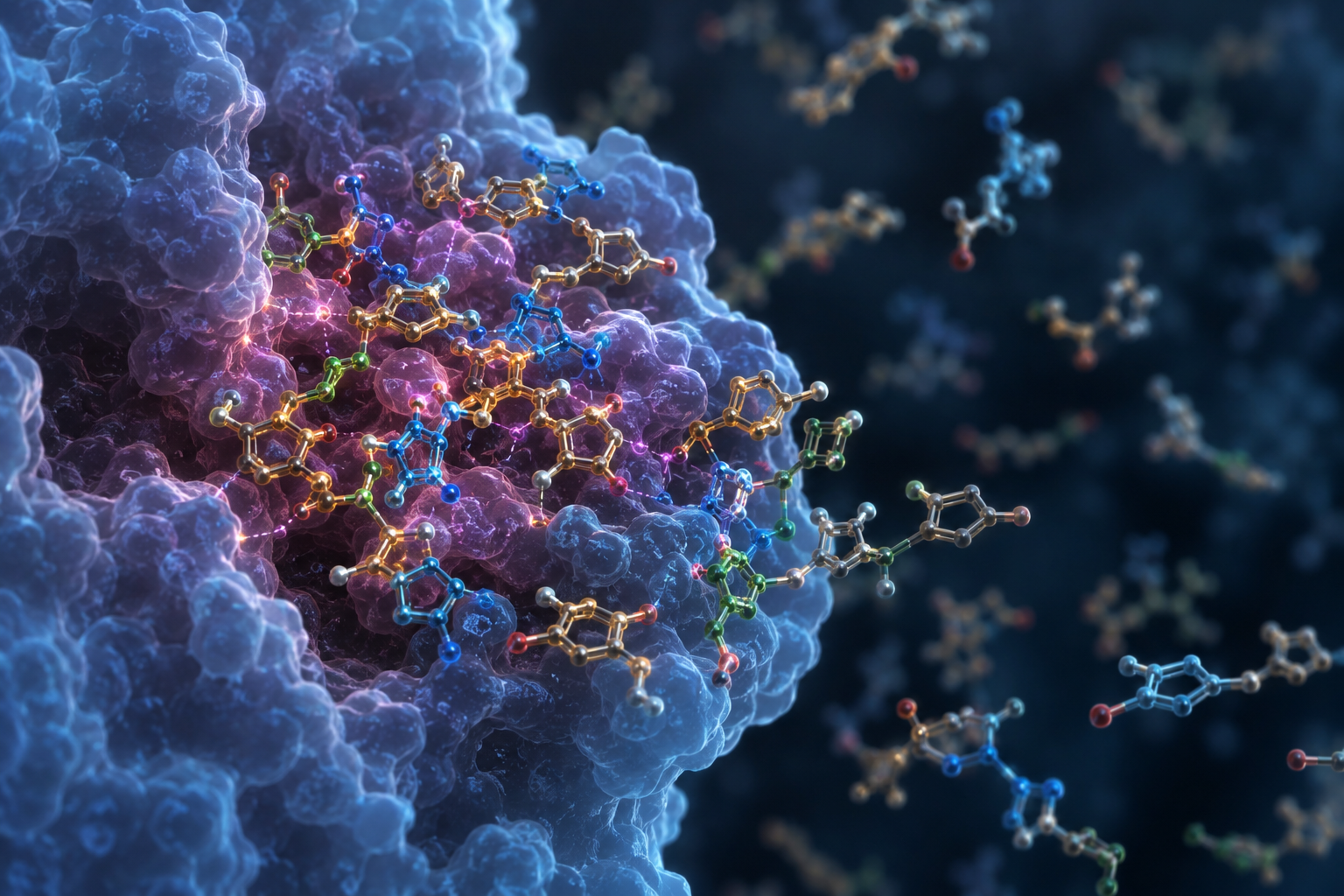
Computationally qualified leads
AGE program
Glucosepane is the predominant advanced glycation end-product (AGE) crosslink measured in aged human skin collagen. Its stable ring masks the chemistry needed to break the bridge. Our lead smart molecule is designed to recognize mature glucosepane, open the ring and cleave the bridge while preserving the collagen backbone and native enzymatic crosslinks.
What we’ve completed. The lead met both computational selection criteria across three modeled profiles and passed an initial computational screen for potential interaction with the hERG cardiac ion channel. The current lead awaits synthesis and laboratory testing.
What we’ll test next. We plan to synthesize an initial series of 8–15 compounds and qualify an assay using authentic glucosepane. The study will identify and quantify cleavage products, account for the starting material and measure whether the native matrix remains intact. Direct hERG testing and replication of key findings will inform selection of a lead and backup for further development.
Where it could lead. Selective cleavage would provide a basis for testing whether glucosepane reversal can improve vascular function. Ocular, renal, cartilage and skin applications are potential follow-on opportunities, each with its own evidence requirements.
Gene-editing start–stop control program
Lead candidate ready for testing
This program explores whether a separately administered smart molecule could pause gene-editing activity and allow it to resume after the molecule disengages. The goal is to control the editing window while preserving the intended edit.
The research team has prepared a structural reference and initial computational models. Reversible control remains to be demonstrated experimentally.
NLRP3 inflammasome inhibition program
NLRP3 is an innate immune sensor that helps trigger inflammation. NIM-007 is a smart molecule designed to suppress disease-associated NLRP3 activation while preserving resting-state function and sparing other immune pathways.
NIM-007 · Selected computational inhibitor candidate program
NIM-007 was selected from five computationally characterized candidates. The next step is to synthesize and characterize the candidate, then test whether inhibition depends on the activation state of NLRP3. The planned studies will also evaluate mechanism, selectivity and early drug-development liabilities.